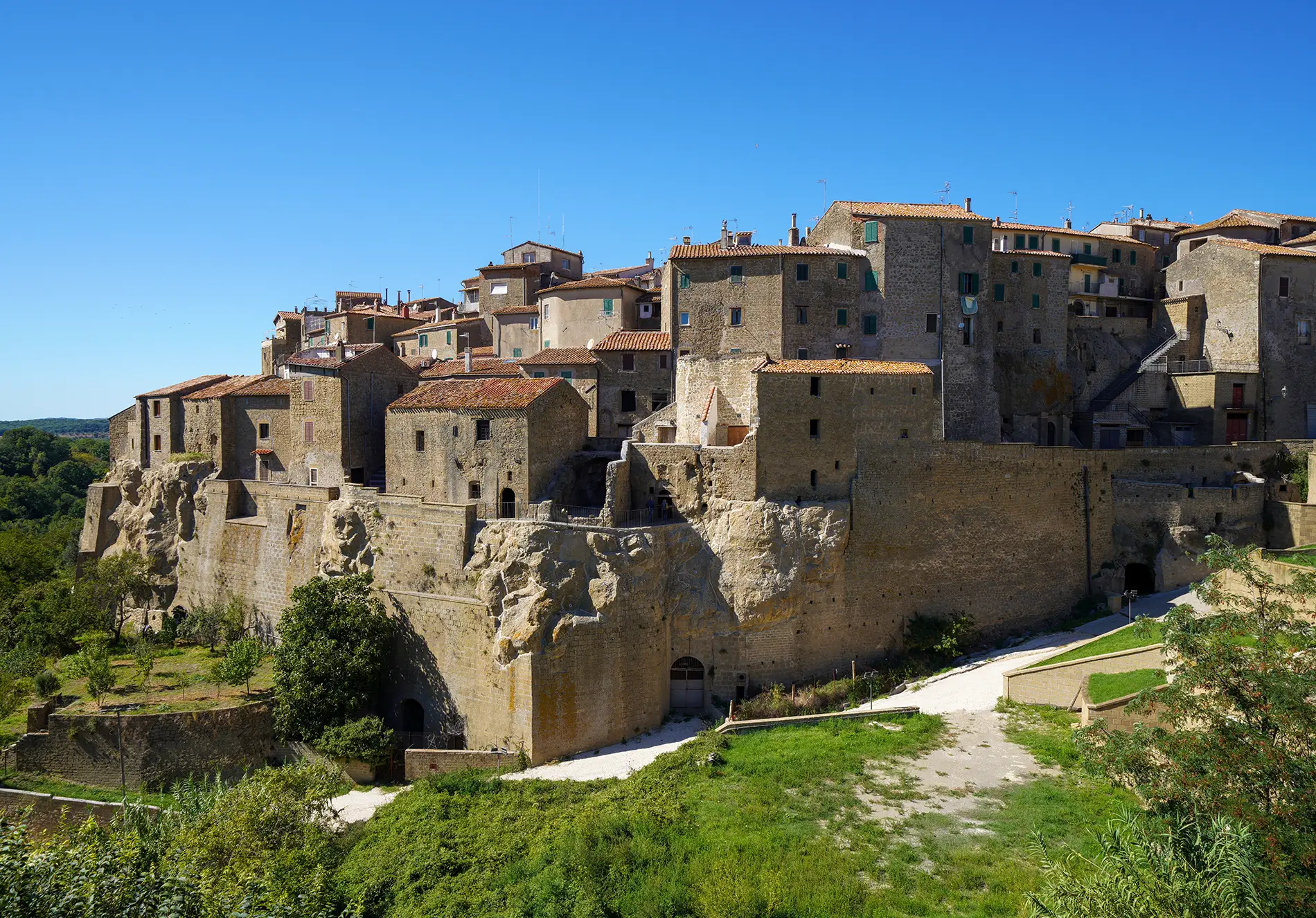
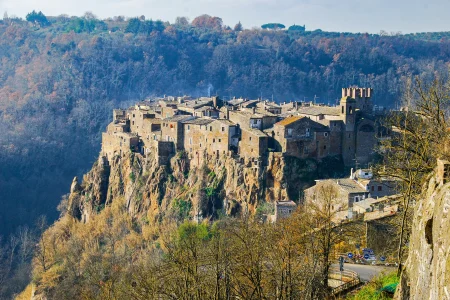
Farnese is a small and charming village located in the northwestern part of the province of Viterbo, in the heart of Alta Tuscia, near the border with Tuscany and not far from Lake Bolsena. Nestled in the wild and unspoiled landscape of the Selva del Lamone Nature Reserve, Farnese is an authentic example of a perfectly preserved medieval village, where history, nature, and tradition blend together in perfect harmony.
Getting to Farnese is easy by car or public transport. From Rome, the village is about 130 kilometers away: you can take the A12 motorway to Montalto di Castro, then continue along the provincial road towards Canino and then Farnese. Those coming from Florence or the north can exit the A1 at Orvieto and follow the road toward Lake Bolsena, passing through Gradoli and Ischia di Castro. The village is not directly served by a train station, but the nearest ones are in Montalto di Castro and Orvieto, from where you can continue by local bus or rental car.
The history of Farnese is deeply intertwined with the powerful family of the same name, which took its name from this very place and, over the centuries, profoundly influenced Italy’s political, artistic, and religious history. Already inhabited in Etruscan and Roman times, the territory of Farnese gained strategic importance in the Middle Ages and reached its peak between the 16th and 17th centuries, when it became one of the main fiefdoms of the Farnese family, closely associated with Pope Paul III.
Among the most significant landmarks stands Palazzo Chigi, now the seat of the Farnese Town Hall. The building, imposing and austere, overlooks the main square of the village and represents an important example of late Renaissance architecture. It was built in the 17th century by the Chigi family, who succeeded the Farnese in controlling the area. Inside, it preserves historic rooms, decorated halls, and evidence of the town’s noble past.
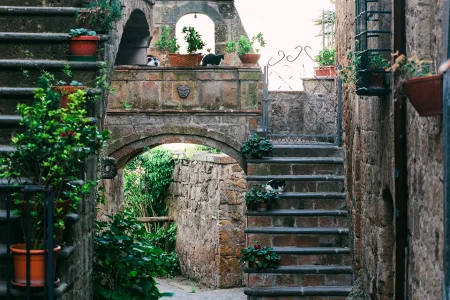
Strolling through the historic center, one encounters charming views, stone-paved alleyways, and ancient houses built with the area’s characteristic tuff stone. Worth noting is the Church of San Salvatore, with its simple Romanesque façade and an interior rich in frescoes and sacred artworks.
Visitors to Farnese should not miss the nearby Selva del Lamone, a protected natural area of volcanic origin, crisscrossed by ancient paths, archaeological remains, and particularly rich flora. This ancient forest, shrouded in mystery and legends, offers an immersive experience in nature, history, and spirituality. Moreover, the surrounding area is home to important Etruscan and Roman archaeological sites, such as those of Castro, the ancient city destroyed in the 17th century by order of Pope Innocent X.
Farnese has a curious and little-known connection to the story of Pinocchio. In 1972, director Luigi Comencini chose this very village as one of the main locations for filming scenes of the famous television miniseries The Adventures of Pinocchio, with Nino Manfredi playing the role of Geppetto. The timeless atmosphere of Farnese, with its stone alleys, medieval arches, and quiet little squares, provided the perfect backdrop for recreating the fairytale world of the beloved puppet. Even today, it’s possible to recognize corners of the village captured in the series, and this detail adds to the charm of the town, making it an unmissable destination for cinema and literature enthusiasts.
Farnese is therefore an ideal destination for those wishing to discover an authentic corner of Tuscia, where time seems to stand still and every stone tells an ancient and fascinating story.